
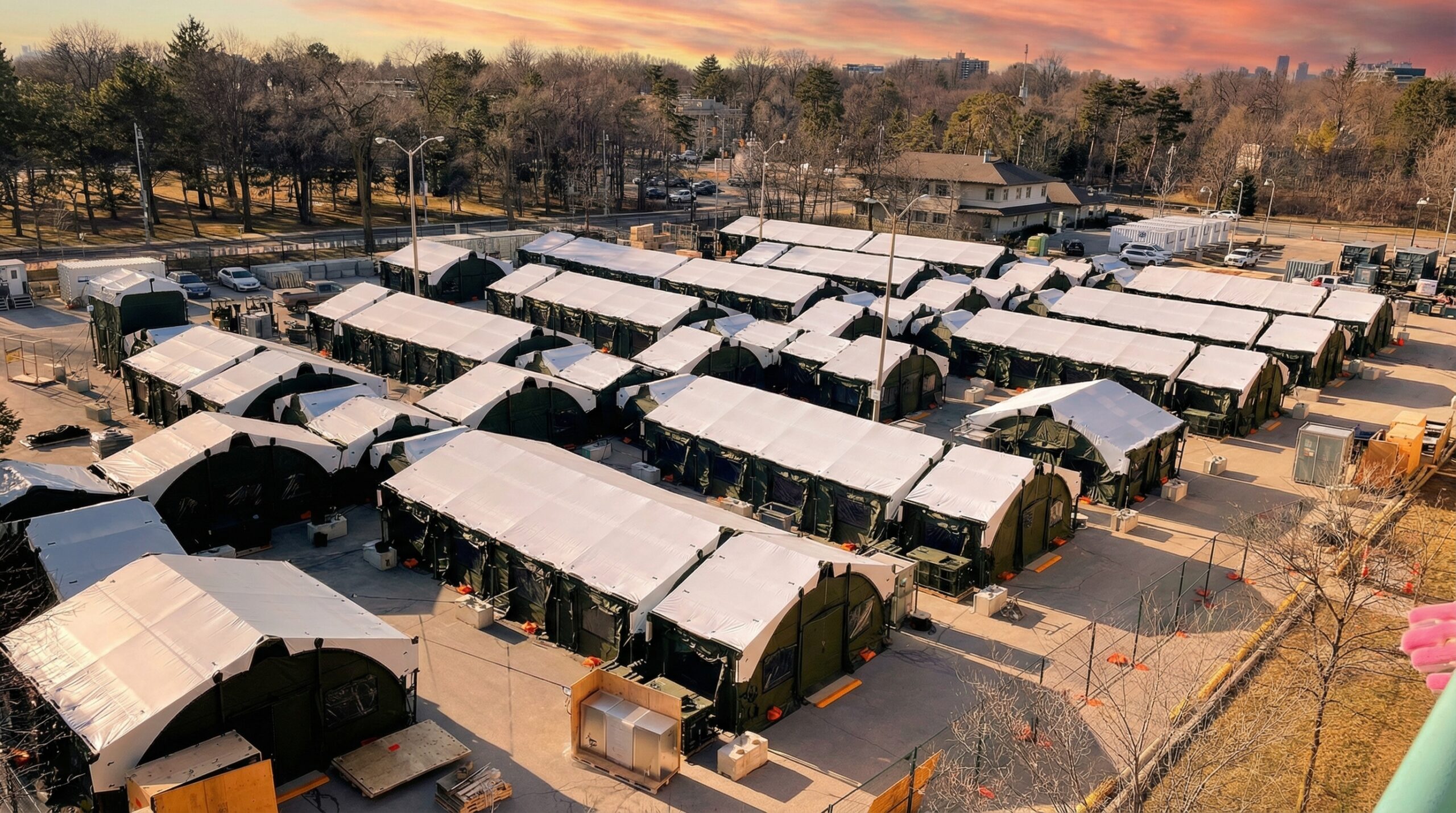

During the height of the COVID-19 pandemic, few healthcare systems were spared the immense pressure placed on their facilities and frontline staff. In Canada, hospitals faced unprecedented surges in respiratory patients requiring isolation, oxygen therapy, and intensive care. It was in this context that Weatherhaven was called upon to deliver three, fully deployable, 100-bed Mobile Health Unit (MHU) to Canada. The project demanded speed, technical precision, and unwavering coordination at a time when supply chains were strained, travel was restricted, and public health measures complicated every aspect of mobilisation.
Weatherhaven rose to the challenge with exceptional professionalism and resilience. Despite the logistical constraints and heightened safety protocols of the pandemic, the company successfully designed, transported, erected, and commissioned complete field hospitals attached to existing hospitals, yet entirely self-contained. This achievement required extensive collaboration with hospital leadership, municipal planners, and emergency authorities to secure approvals, coordinate utilities, and manage site access. Under extraordinarily difficult circumstances, Weatherhaven delivered a solution that was not only operationally effective but also highly commended for its quality, reliability, and speed of deployment.
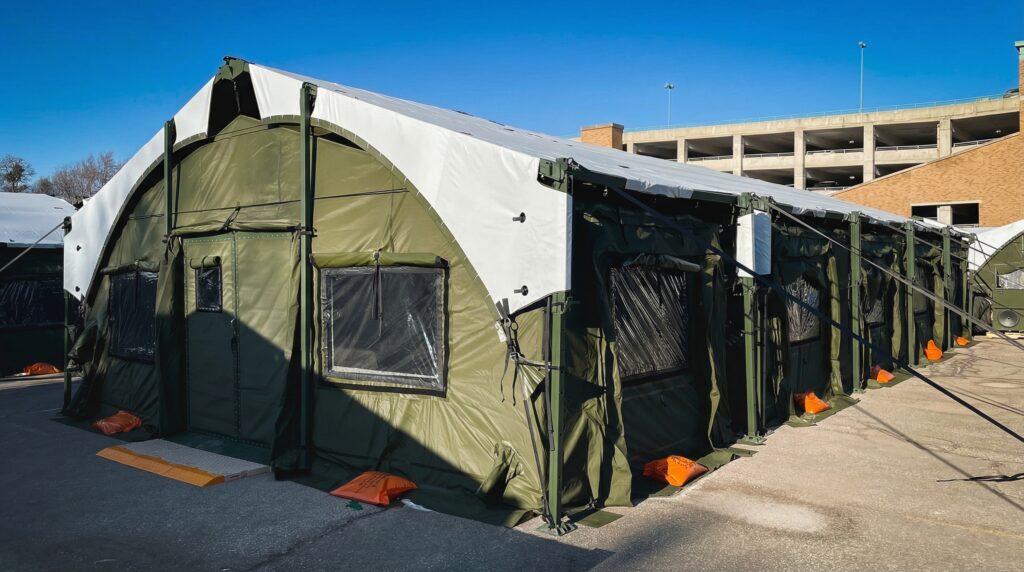
Modular military-grade shelters formed scalable respiratory care facility.
At the core of the deployment was a modular shelter system derived from the Headquarters Shelter System (HQSS) originally developed for the Canadian Department of National Defence. Each MHU was purpose-built as a 100-bed respiratory care facility, configurable to meet COVID-19 treatment needs. It included two 10-bed Intensive Care Units and eight 10-bed wards, each with independent HVAC systems featuring HEPA filtration and negative pressure to support infection prevention and control. The shelters were rapidly deployable, with 4-module units of approximately 1,000 square feet capable of being rapidly erected, enabling swift site activation during a critical period.
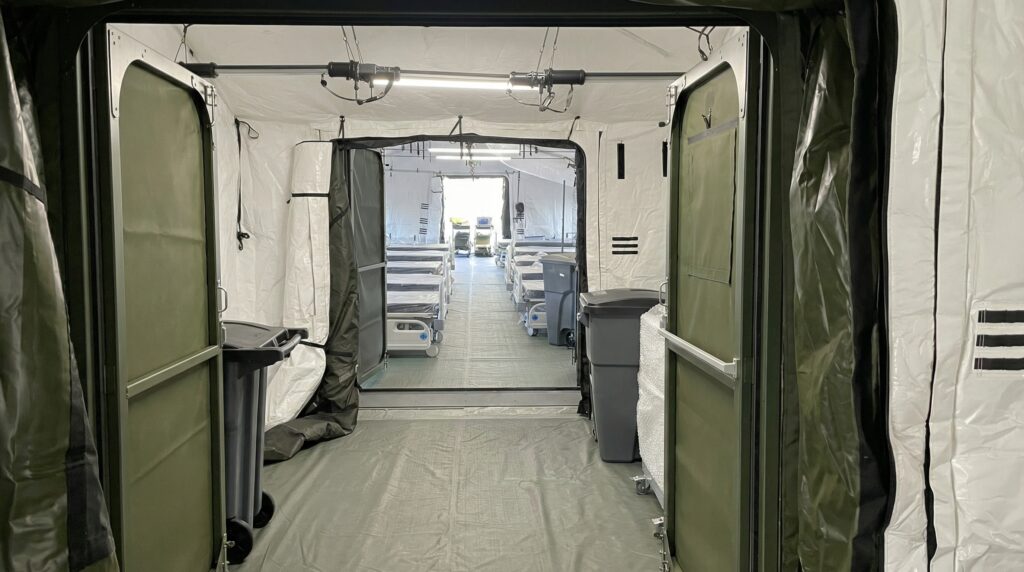
Infection-controlled layout ensured safe patient and staff separation.
The layout incorporated clearly separated functional zones to minimize cross-contamination. A dedicated reception, incoming medical examination area, isolated emergency entrance, and resuscitation bays ensured safe patient flow. Each ward was equipped with removable, cleanable partitions, individual anterooms, and patient washrooms. ICU configurations included nurse stations and central oxygen connections, while staff areas provided administrative space, pharmacy, clinical rooms, lockers, and shower facilities. Semi-rigid flooring systems with integrated cable and plumbing raceways supported efficient installation and safe utility routing throughout the complex.
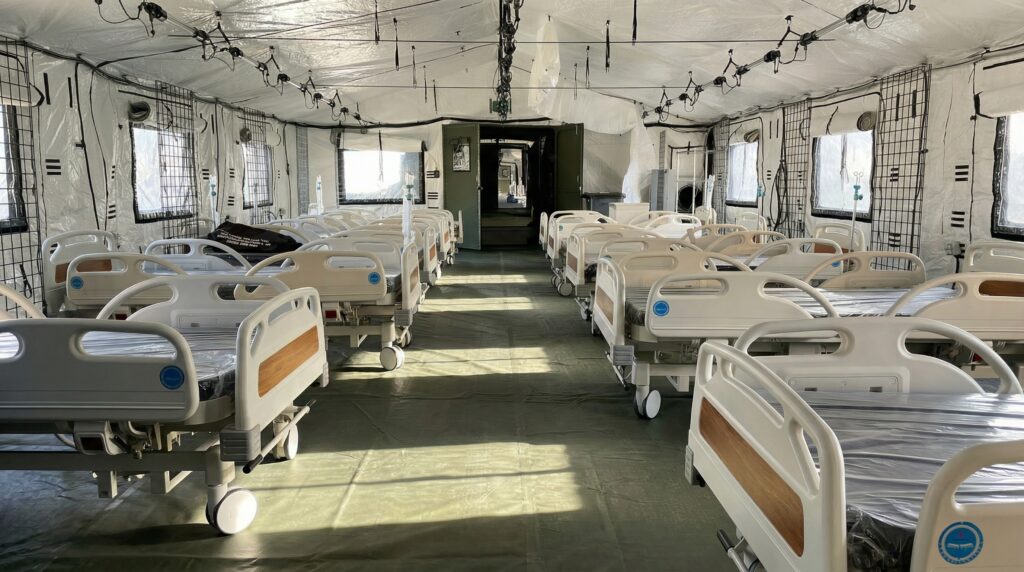
Integrated medical equipment enabled full hospital-level critical care.
Major medical equipment was integrated to deliver hospital-grade care within the field environment. The facility included single-channel infusion pumps, ventilators, vital signs monitors with AED capability. Imaging capability was provided through mobile 40kW X-ray systems with wireless detectors, alongside ultrasound systems. Electric hospital beds, including ward beds and premium ICU beds, ensured patient comfort and clinical functionality. These systems were supported by bedside oxygen concentrators in wards and centralized oxygen supply for intensive care.
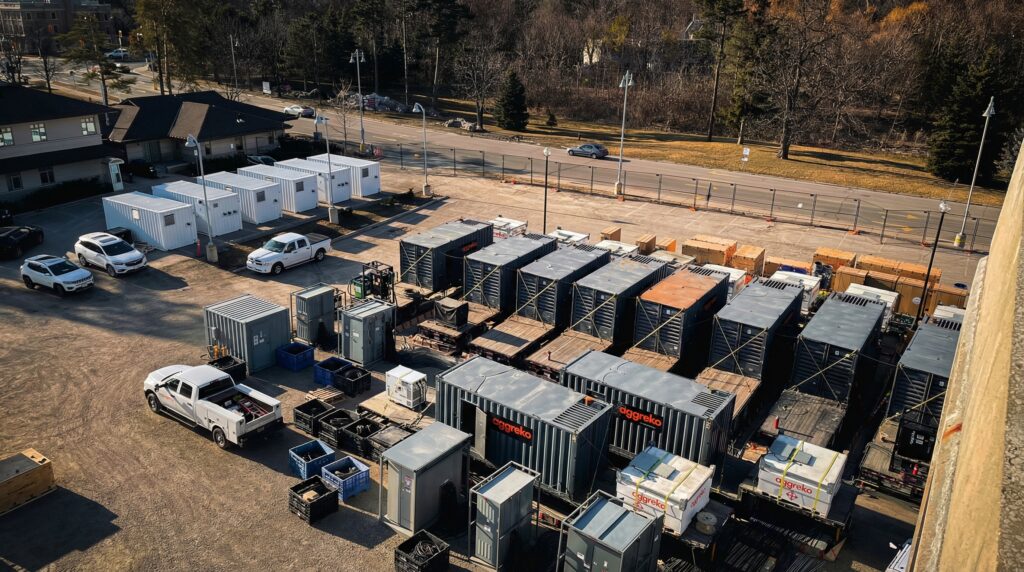
Redundant power, oxygen, and water systems ensured autonomy.
A defining feature of the MHU was its fully redundant and self-sufficient utilities infrastructure. The power system consisted of independent generation and distribution units, ensuring uninterrupted operation even in the event of grid disruption. The oxygen system included two 600 litres-per-minute oxygen concentration plants, providing up to 1,200 LPM of central oxygen generation capacity for ICU and resuscitation functions. Dedicated water infrastructure managed potable water, grey water, and black water through heated hoses and contained distribution systems, allowing the facility to function independently of municipal services if required.
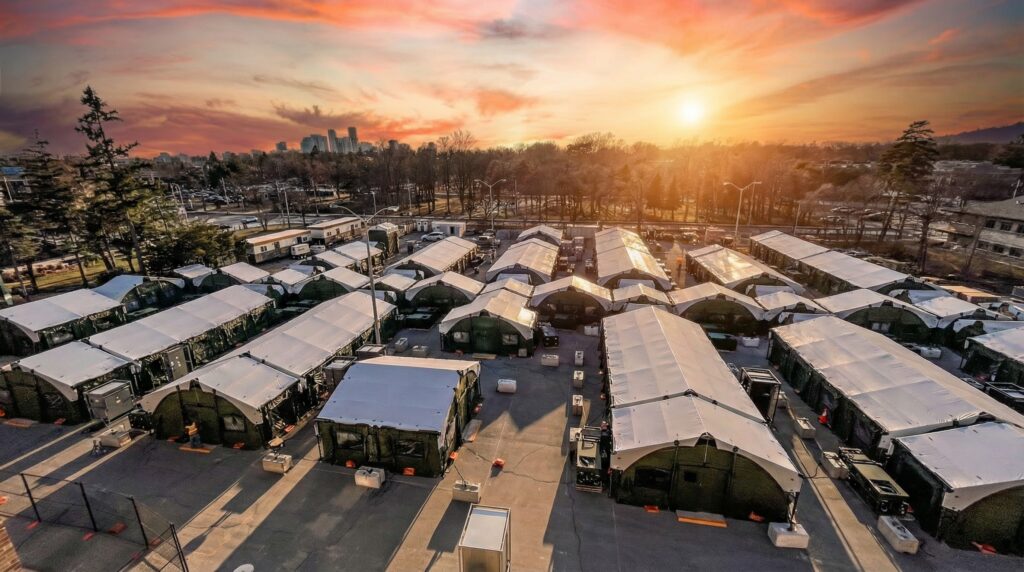
Exceptional logistics delivered deployable hospital under pandemic constraints.
Logistically, the deployment was a remarkable accomplishment. The entire system was transportable in standard 20-foot ISO containers and designed for intermodal freight, including access to remote locations by small aircraft if necessary. Shelters were packed in kits for efficient storage and rapid assembly, and the modular design allowed scalability and reconfiguration to meet evolving patient volumes. Delivered during a period of intense global disruption, the field hospitals stand as a testament to Weatherhaven’s engineering expertise, logistical capability, and unwavering commitment to supporting Canadian healthcare during one of the most challenging moments in recent history.

Showcased products
-
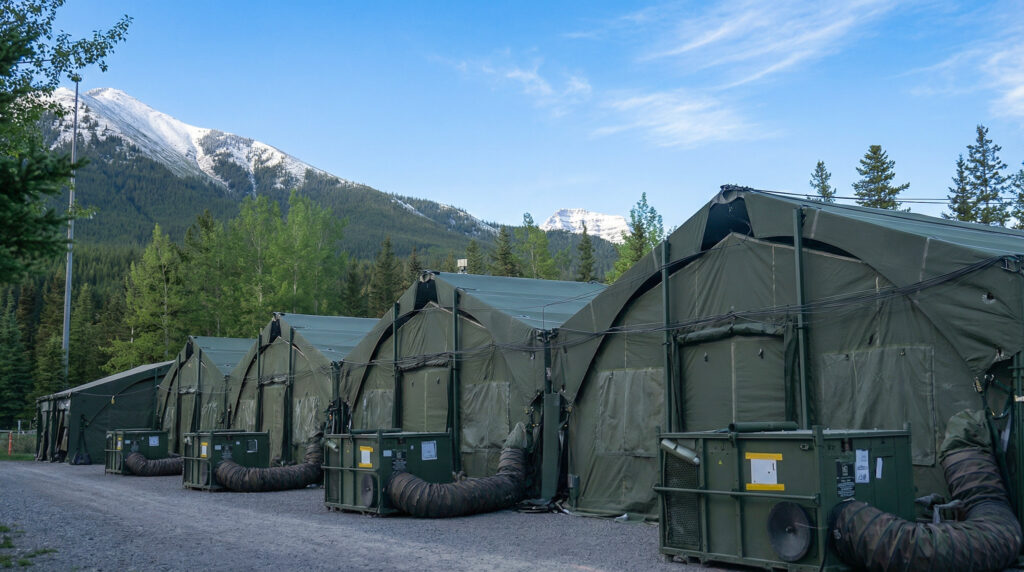
RDMSS
The world’s most advanced soft-walled shelter system, combat proven. Designed by the military, for the military.
Showcased solutions
Client feedback

MHU Delivery PM
‘The commitment to make this work with city planning has been admirable’
PSPC

Please get in touch if you would like to know more about our Military or Commercial shelter and camp solutions.