
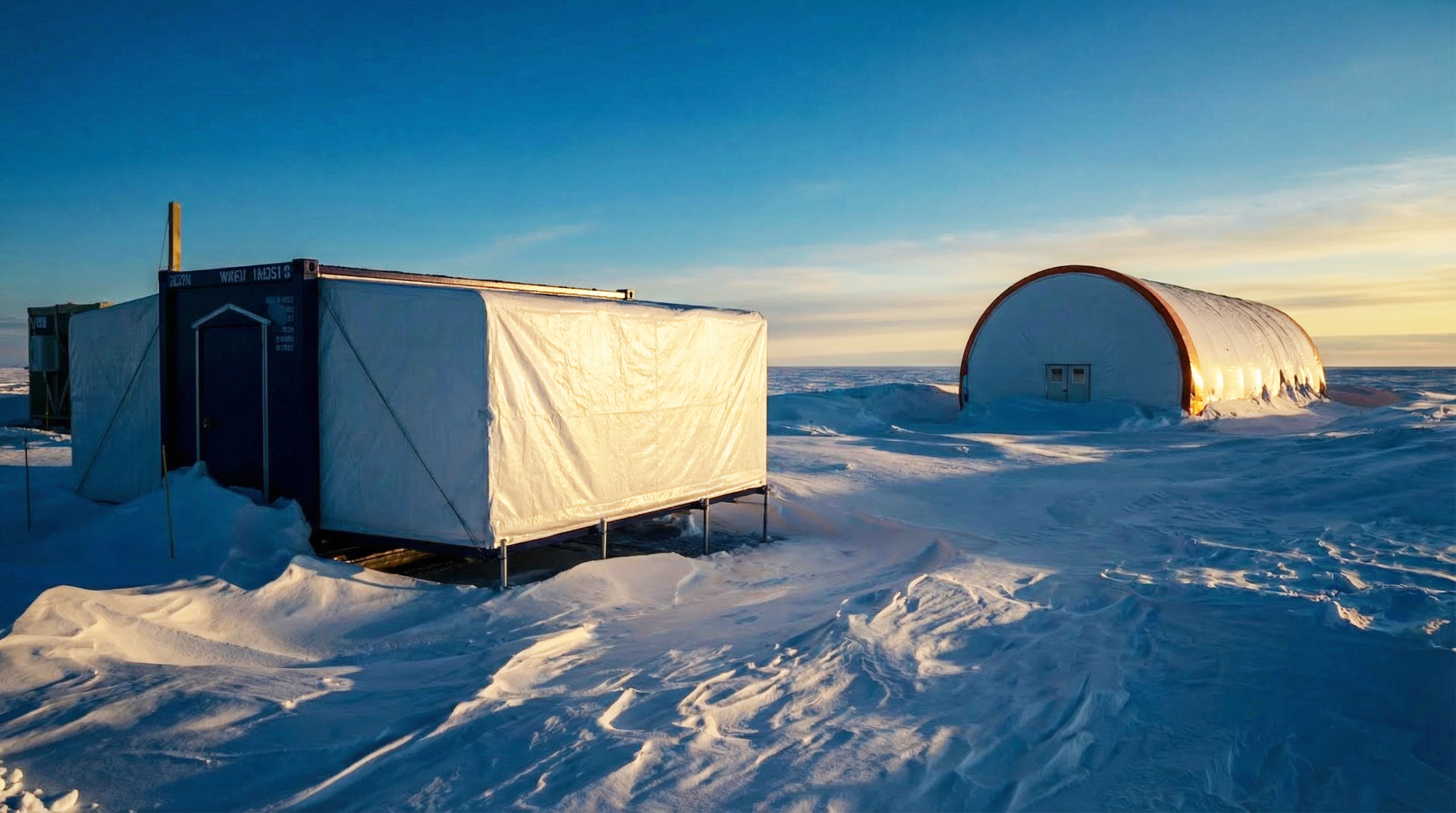

For many years, Weatherhaven shelters have travelled south with the Australian Antarctic Division (AAD) as its Antarctic research has grown from coastal sites like Law Dome to deep-field campaigns such as the Million Year Ice Core project at Dome C North. These cores now underpin Australia’s understanding of greenhouse gases and climate variability stretching back thousands of years and, eventually, toward the two-million-year target guiding AAD’s current drilling strategy.
Australian scientists first cut their teeth on high-resolution ice cores at Law Dome, near Casey, where heavy snowfall and carefully chosen sites yielded detailed records of greenhouse gases and Australian climate over the last two millennia. Today, the same program pushes inland to Dome C North and Little Dome C, camping more than a thousand kilometres from the coast. At every step, robust, redeployable shelters make it possible to live and drill safely in these extremes.
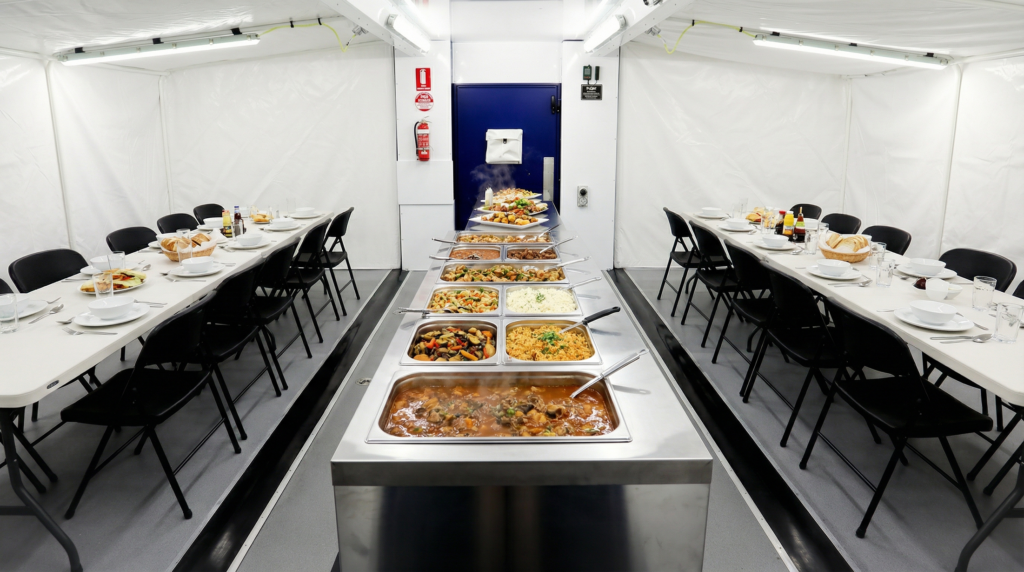
MECC shelters creating warm, reliable hubs on the frozen plateau
Mobile Expandable Container Configuration (MECC) shelters give AAD something priceless on the ice sheet: a building that ships like a standard container, then unfolds into a warm, spacious hub in minutes. Once deployed, MECC units become operations rooms, kitchens, dining, and control centres for inland traverses and drilling campaigns, combining rugged steel exteriors with insulated interiors designed to cope with the brutal winds and temperatures of the Antarctic plateau.
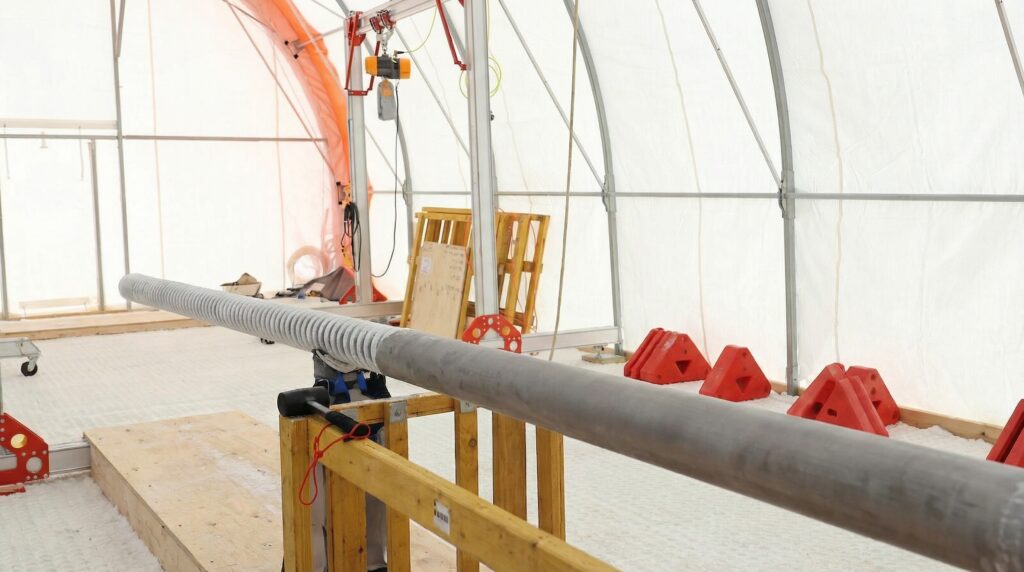
Series 4 drill halls protecting delicate science from brutal conditions
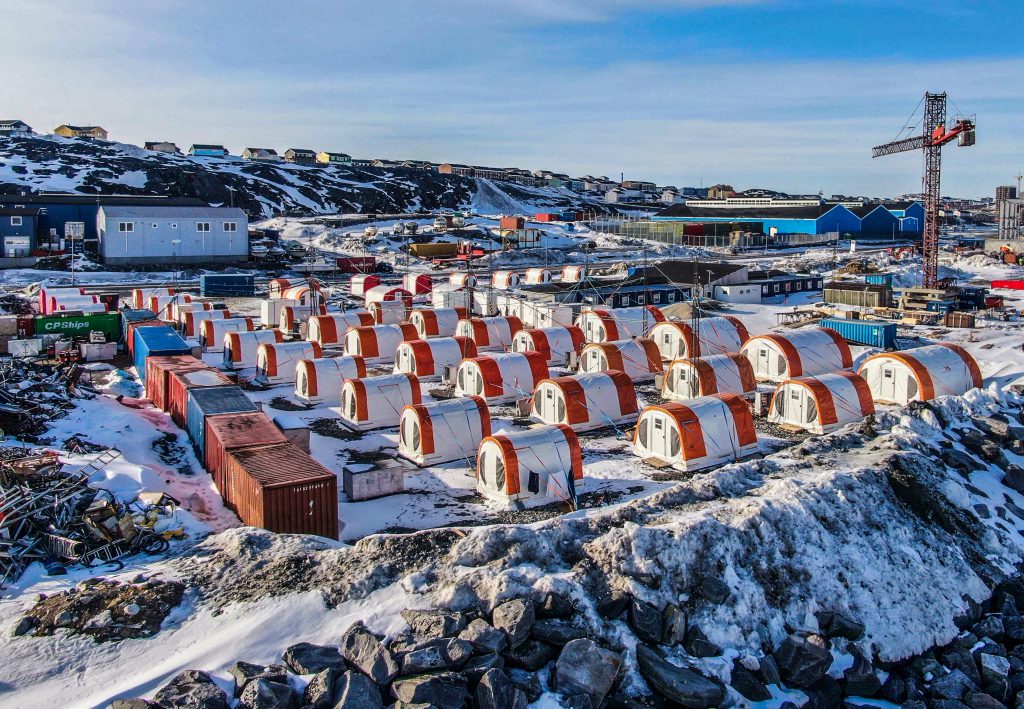
Ice-core drilling demands a long, stable, temperature-controlled hall where equipment, cores, and people are shielded from blowing snow and −30°C air. Weatherhaven’s Series 4 shelters, adapted as drill halls, provide that environment: modular spans that can be linked to form the 20-plus-metre-long drilling galleries now operating on the East Antarctic plateau. At Dome C North, AAD’s Million Year Ice Core team works inside just such a large drilling shelter, keeping the entire operation indoors and predictable.
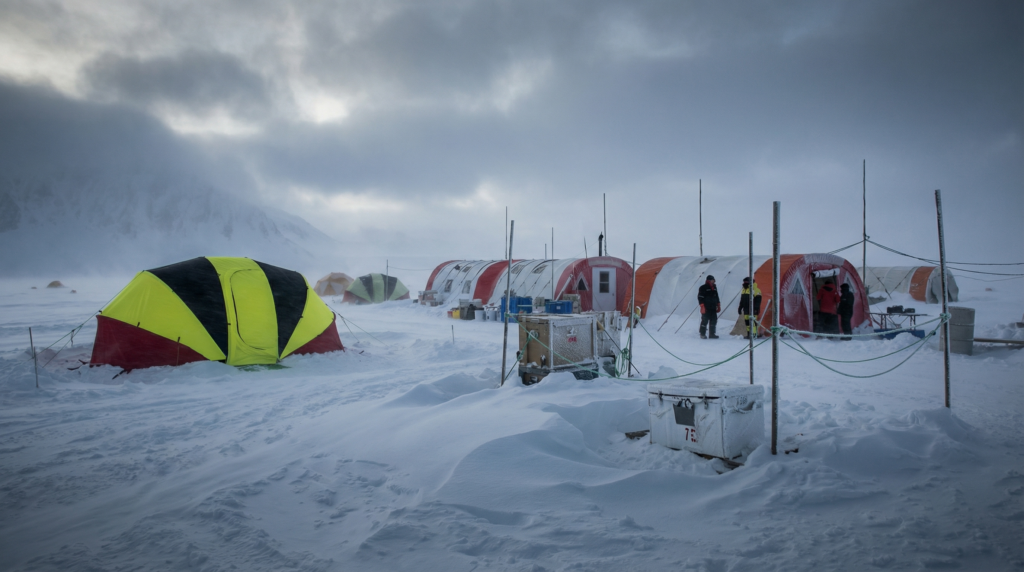
Polarhaven mess tents becoming community hearts of remote drilling camps
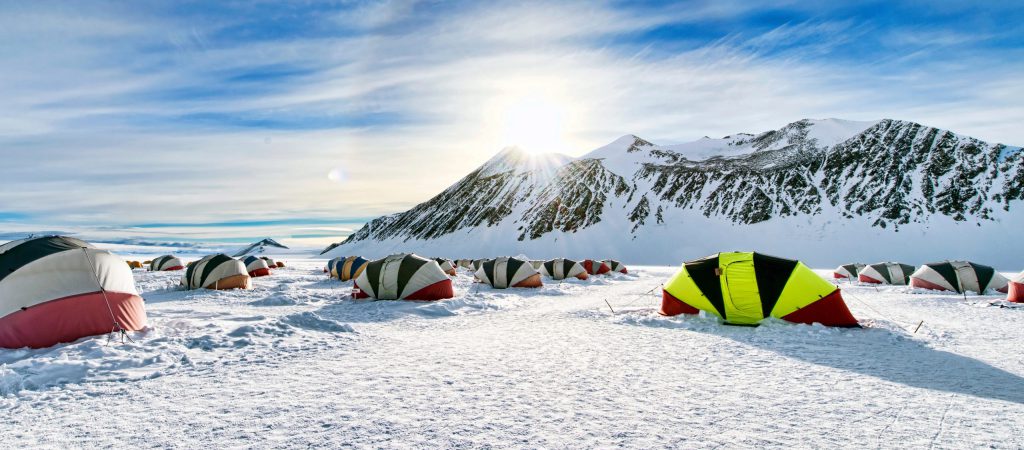
In deep-field ice-core camps, Polarhaven shelters often become the social and logistical centre of operations. Their generous floor area and height allow AAD to combine dining, briefing space, and communications gear under one heated roof, turning a simple tent into a mess, meeting room, and nerve centre. At sites like Law Dome and inland projects such as Aurora Basin North, these large, dome-like communal shelters help keep morale high and coordination tight through long, demanding seasons.
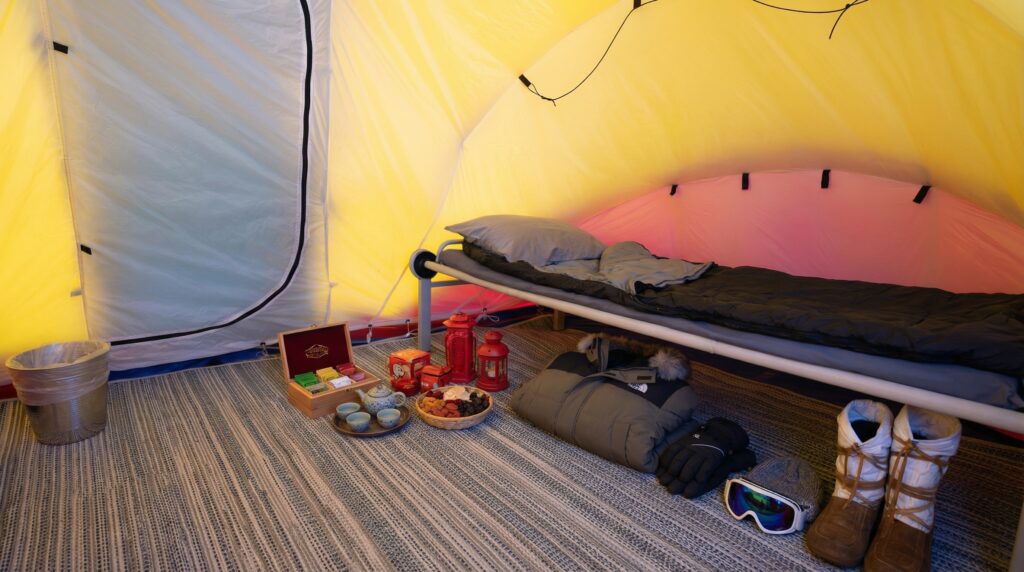
Endurance shelters extending field seasons far beyond traditional summer windows
Endurance shelters add flexible, soft-walled space to these containerised hubs, giving AAD teams the workshops, storage areas, and communal rooms they need to keep drilling long after a normal tent camp would be forced home. Their arched frames and engineered fabrics are built for heavy snow loading and katabatic winds, so mechanics can service drills, electricians can troubleshoot systems, and field scientists can keep working even when the weather outside is closing in fast.
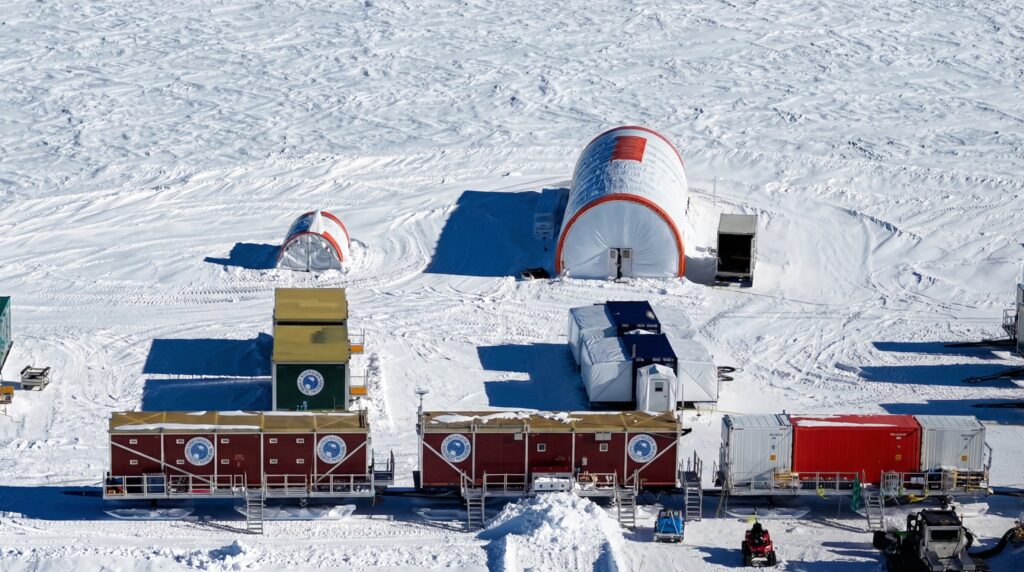
Sustained innovation keeping Australian Antarctic science safe, efficient and focused
Taken together, MECC units, Endurance and Polarhaven shelters, and Series 4 drill halls form a complete field-infrastructure toolkit for the Australian Antarctic Division. They turn blank white ice into functioning villages: warm bunks, kitchens, labs, workshops, and precision drilling galleries. By handling the hardest part, staying alive, warm, powered, and organised in East Antarctica’s worst weather—these shelters let Australia’s ice-core teams focus on what matters most: extracting climate history and translating it into insight for the future.

Showcased products
-
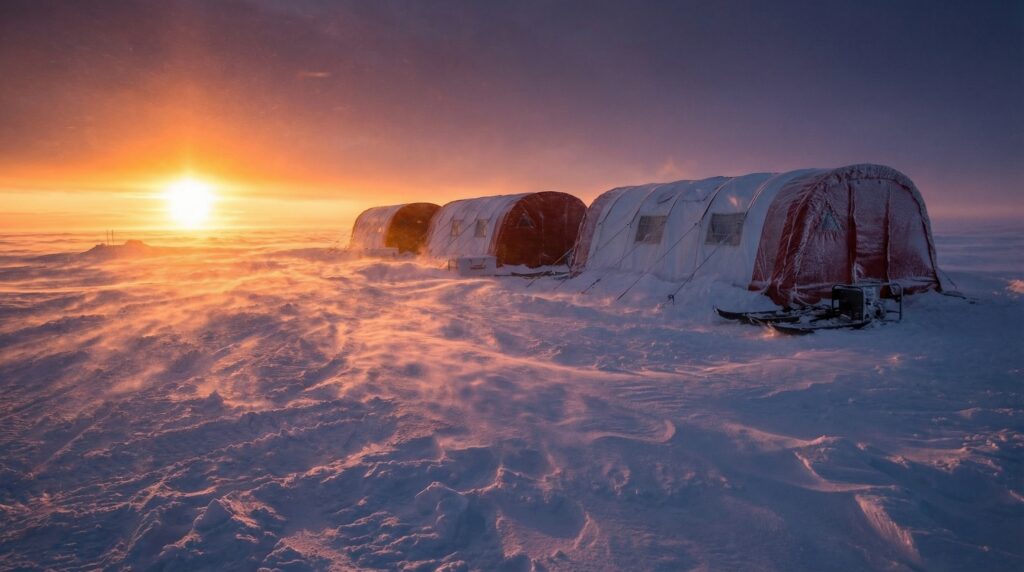
Polarhaven
Polarhaven shelters deliver trusted protection for extreme polar missions, combining comfort, strength, rapid deployment, and flexible sizing.
-
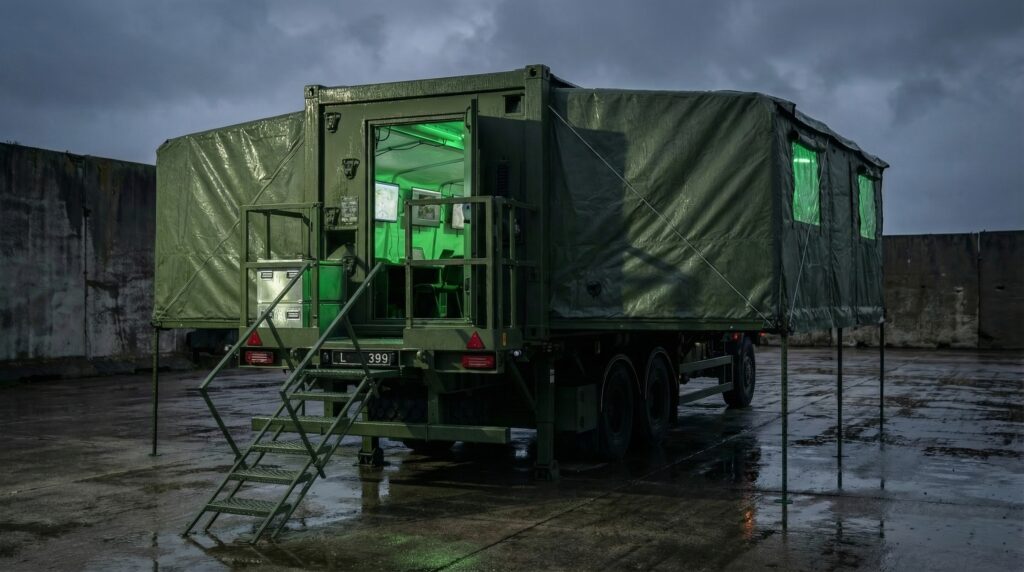
MECC
MECC is a Battle-proven, robust, and reliable 3 in 1 expandable container trusted by militaries and commercial organisations worldwide.
-
Endurance
Engineered for polar extremes, the Endurance shelter delivers rapid deployment and rugged protection in the world’s harshest environments.
-
Series 4
Trusted by many, the Series 4 shelter delivers proven performance in extreme global environments
Showcased solutions
Client feedback

Project Manager
‘The Series 4 drill shelter has been fantastic’
AAD

Please get in touch if you would like to know more about our Military or Commercial shelter and camp solutions.